
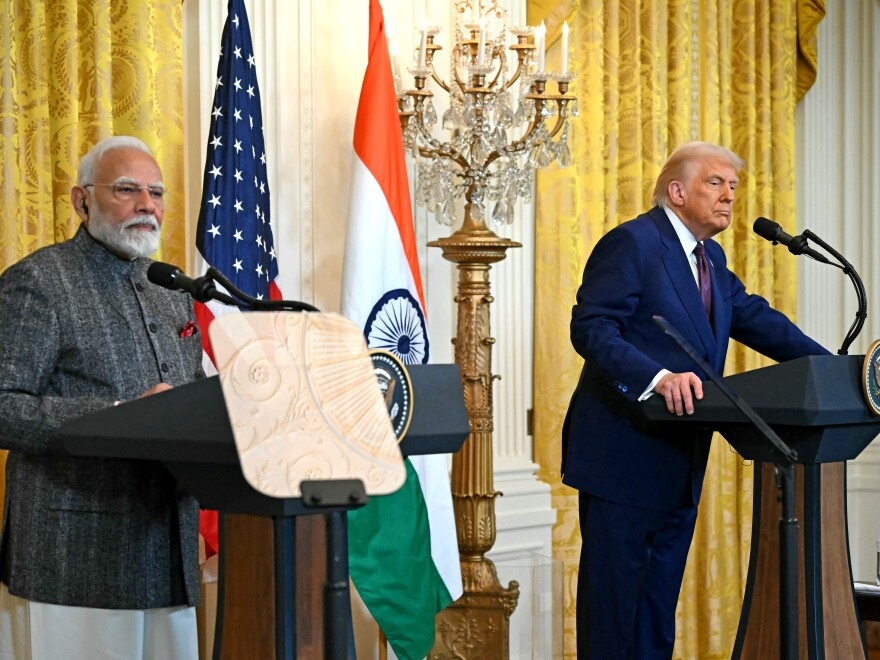


President Donald Trump escalated his trade rhetoric on Monday, singling out India as a major offender in what he described as a deeply unfair economic relationship.
“In other words, they sell us massive amounts of goods, their biggest ‘client,’ but we sell them very little,” Trump posted on Truth Social. “Until now a totally one-sided relationship, and it has been for many decades. It has been a totally one-sided disaster!”
The former president also criticized India for sourcing most of its oil and military products from Russia, noting that U.S. exporters play a much smaller role in those sectors. His comments come as Prime Minister Narendra Modi pursues closer ties with both Russia and China, reflecting fraying relations with Washington under Trump’s latest round of trade measures.
Despite Trump’s aggressive stance, the legal foundation of his global tariff strategy remains shaky. On Friday, a federal appeals court ruled that most of Trump’s tariffs were illegal, affirming an earlier decision by the Court of International Trade that the president overstepped his authority by invoking emergency powers.
While the judges allowed the tariffs to remain in effect during the appeals process, the ruling throws Trump’s “reciprocal tariffs” program into uncertainty. These duties, targeting dozens of U.S. trading partners, were designed to match or exceed foreign tariffs on American goods.
Trump quickly responded online, insisting, “ALL TARIFFS ARE STILL IN EFFECT!” and blasting the court as “Highly Partisan.” He expressed confidence that the U.S. Supreme Court would ultimately uphold his trade measures, framing tariffs as a critical tool to “benefit our nation.”
The international response has been swift. In Brazil, President Luiz Inácio Lula da Silva authorized retaliatory measures against the 50% U.S. tariffs imposed by Trump, though he emphasized that his government still seeks a negotiated outcome.
Meanwhile, Mexico has announced plans to raise tariffs on Chinese imports under its 2026 budget, a move aimed at protecting domestic industries. The decision comes amid mounting U.S. pressure, with Trump accusing China of funneling cheap goods into the United States through Mexico.
Despite the court challenges, U.S. Trade Representative Jamieson Greer said Sunday that trade talks remain active. “Our trading partners continue to work very closely with us on negotiations,” Greer told Fox News. “People are moving forward with their deals, regardless of what this court may say in the interim.”


 Pump Radar
 Stock Alerts