
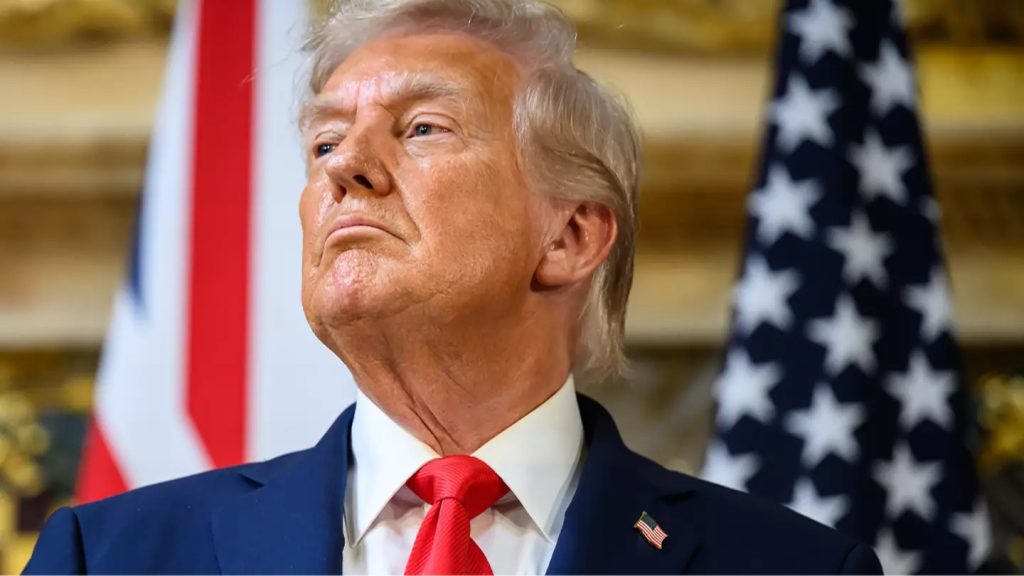


President Donald Trump will meet with lawmakers from both parties in the Oval Office Monday afternoon in a last-ditch effort to prevent a government shutdown. However, there remains little clarity over whether the core disputes that have stalled negotiations will be addressed.
At the center of the stalemate is a contested authority claimed by the Trump administration to unilaterally cancel previously approved federal spending. Democrats have made clear that any shutdown-averting measure they will support—required for Senate approval—must limit the president’s ability to exercise such authority, ensuring that any agreement reached is fully enacted.
Democratic leaders are also pushing for several healthcare provisions, including extensions of COVID-era subsidies that are set to expire in the coming months. “No one can trust their word on healthcare,” House Minority Leader Hakeem Jeffries said Monday, highlighting the lack of confidence in the GOP’s commitments. Republicans, in turn, have rejected these demands, but they also lack the votes to advance their own proposal, which would simply extend government funding at current levels for about seven weeks.
As lawmakers prepare for the 3 p.m. ET White House session, questions remain about whether any substantive negotiation will occur or if the meeting will serve more as a symbolic power play. Analysts over the weekend suggested that grandstanding may be the more likely outcome. Capitol Hill news outlet Punchbowl News described the session as “more likely than not — a waste of time,” while Henrietta Treyz, managing partner at Veda Partners, called it “more an opportunity for grandstanding.” Even Trump himself offered no guarantees of success, telling reporters recently, “Could be, yeah,” when asked whether a shutdown would occur.
If gridlock continues, a partial government shutdown could begin Wednesday at 12:01 a.m. ET. Among the immediate consequences would be delays to Friday’s jobs report and the implementation of a Trump administration plan for large-scale federal workforce reductions.
A contingency plan released Monday by the Department of Labor outlined that the Bureau of Labor Statistics would suspend operations during a shutdown, noting that “economic data that are scheduled to be released during the lapse will not be released.” The prospect of delayed economic reporting has already drawn attention from economists and financial markets, as the impacts could be more immediately noticeable than in prior shutdowns.



 Pump Radar
 Stock Alerts