
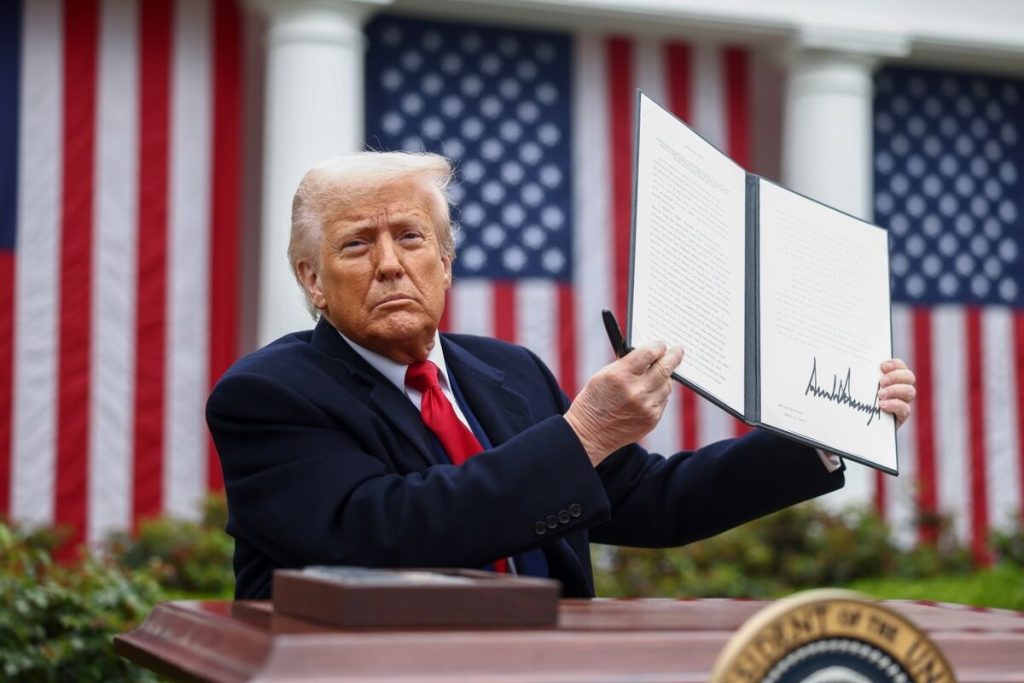


President Trump’s ongoing trade battles are increasingly compelling countries to choose sides between the U.S. and its major economic rivals, China and Russia. While this dynamic has been developing for months, recent events from India to Mexico underscore how nations are weighing their strategic and economic options in response to U.S. tariff policies.
India is at the center of the current spotlight, facing 50% U.S. tariffs on a broad range of goods, from textiles to solar panels, largely due to its continued purchases of Russian oil. Efforts by the U.S. to pressure India into reducing its Russian imports appear to have backfired, as Indian oil purchases from Russia are expected to continue or even rise in September, according to Reuters. Further signaling a tilt toward U.S. rivals, Prime Minister Narendra Modi is preparing for his first visit to China in seven years later this week, highlighting a potential strengthening of Indo-Chinese economic ties.
Meanwhile, Mexico is taking a very different approach. Reports from Bloomberg indicate that the country plans to impose new tariffs on Chinese imports, including cars, textiles, and plastics, potentially expanding to other Asian nations. Analysts see this as a move to solidify ties with the U.S. ahead of high-stakes negotiations to renew the United States-Mexico-Canada Agreement (USMCA) next year. Capital Economics noted that Mexico’s dependence on U.S. demand makes it particularly susceptible to Washington’s pressure, demonstrating how Trump’s trade policies are influencing alignment in the Western Hemisphere.
Experts suggest the split between countries like India and Mexico illustrates the broader geopolitical impact of Trump’s tariff strategy. Syracuse University economist Devashish Mitra observed that India may deepen its ties with China, possibly exploring participation in a China-led Asian free trade agreement, as both nations find mutual benefits in navigating a climate shaped by U.S. tariffs.
Treasury Secretary Scott Bessent acknowledged ongoing negotiations with India, stating on Fox Business that while early talks showed delays, the U.S. and India are expected to reach agreements on key sectors such as Apple (AAPL) iPhones and generic drugs, which are currently exempt from the 50% tariffs. Trump has also signaled that additional sector-specific tariffs could be applied in coming months, keeping the pressure on India to negotiate terms.
Other countries remain in more complicated positions, navigating competing pressures. Japan, for example, struck a deal with the U.S. but has faced domestic resistance. Japanese trade negotiator Ryosei Akazawa recently canceled a visit to Washington, citing the need for further talks on U.S. commitments to reduce car and auto part duties and clarify the application of preexisting tariffs on top of a proposed 15% universal tariff.
South Korea is also seeking more favorable terms, with President Lee Jae Myung visiting Washington to negotiate improvements. Trump, at a recent Cabinet meeting, acknowledged the discussions, noting that while attempts at new arrangements were made, “we just kept the same deal.”
Meanwhile, the European Union advanced legislation this week to remove all tariffs on U.S. industrial goods — a key precondition for fully implementing agreements demanded by the Trump administration.
The unfolding developments highlight a key reality of Trump’s trade approach: nations are being forced to carefully balance economic interests and geopolitical considerations, sometimes aligning more closely with the U.S., and in other cases, leaning toward China and Russia. As tariffs continue to reshape global trade patterns, countries are increasingly confronting the difficult choice of where to position themselves in a world of rising economic tension.


 Pump Radar
 Stock Alerts