
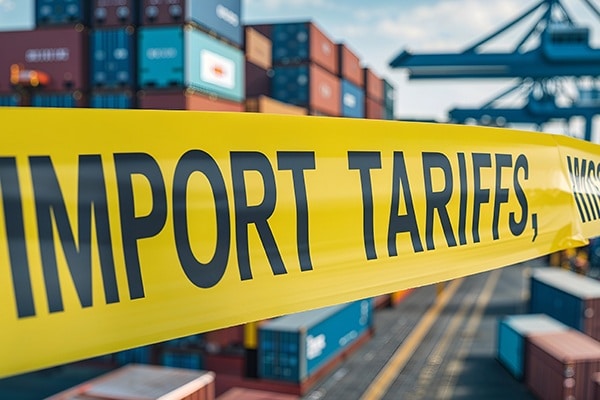


President Trump’s tariff program continued to add substantial revenue to U.S. coffers as customs duties brought in roughly $29.5 billion in August, marking a new high and continuing a trend of record collections. The final data, released Thursday by the U.S. Treasury Department, follows July’s total of $27.7 billion and represents the first full month under the administration’s newly implemented “reciprocal” tariffs, which went into effect on August 7. These measures impose duties ranging from 10% to 50% on imports from various countries across multiple sectors.
The revenue surge coincided with renewed questions about how tariffs affect consumer prices. Economists have increasingly pointed to the policy as a driver of inflation, with RSM chief economist Joe Brusuelas noting in a Yahoo Finance appearance that many of the recent price increases—especially in food and apparel—are directly tied to tariffs. The August inflation report underscored this effect, highlighting the ongoing tension between revenue gains for the government and costs for consumers.
President Trump and Treasury Secretary Scott Bessent have repeatedly emphasized the fiscal benefits of the new duties. Bessent recently stated that “as collection continues to grow, the Trump Administration is fixing the financial shambles it inherited.” However, the boost in revenue may be temporary. Several of the new reciprocal tariffs are facing legal challenges, with two courts already deeming parts of the program unlawful. A Supreme Court ruling expected later this year could force the administration to return a portion of the collected funds. Bessent has estimated that a negative outcome could require the government to give back roughly half of the recent revenue.
The legal scrutiny primarily targets the blanket duties imposed under the 1977 International Emergency Economic Powers Act, while other tariffs based on more established legal authority remain unchallenged. Despite the uncertainty, the revenue totals reflect a consistent upward trajectory: from May’s $22.2 billion to June’s $26.6 billion, and now to August’s near-record haul. Year-to-date receipts for the fiscal year have reached $165.2 billion, with the government’s fiscal year ending on September 30.
While Trump has touted tariffs as a boon for the economy, stock market, and national wealth, the numbers show that tariff revenues still represent a relatively small portion of overall government income. Total receipts for August exceeded $344 billion, meaning tariffs contributed less than 10%. At the same time, government spending topped $689 billion, producing a monthly deficit of $345 billion, highlighting that even with record tariff collections, the fiscal impact is limited in the broader context of U.S. finances.


 Pump Radar
 Stock Alerts