
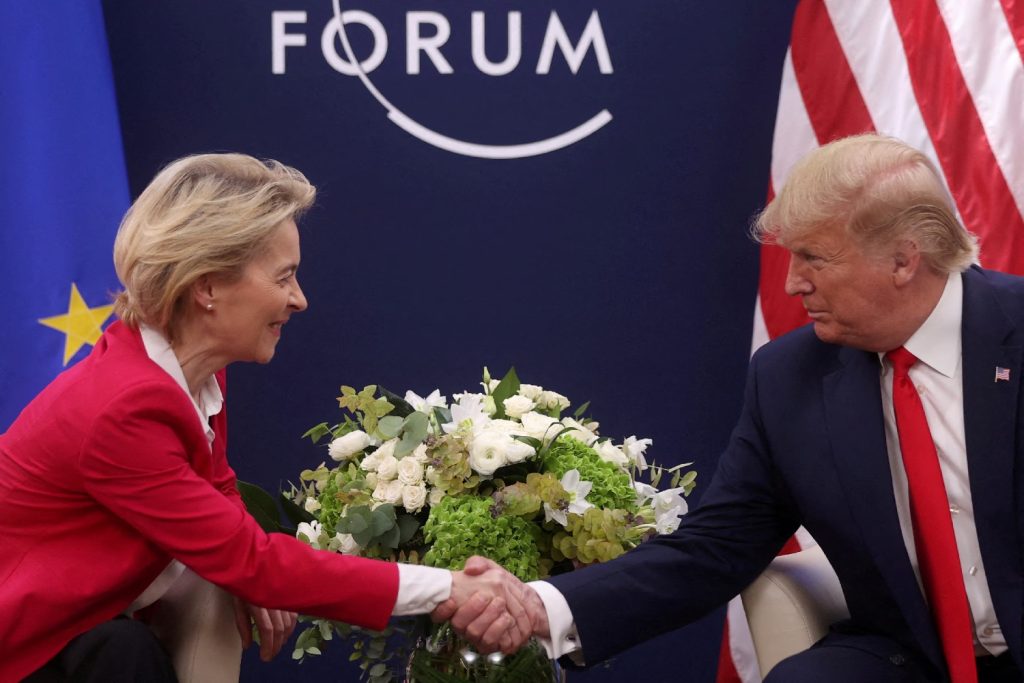


The United States and European Union on Thursday finalized a written framework to codify the trade deal reached on July 27, marking a significant step in formalizing the agreement. Under the terms, Washington will impose a 15% tariff on most EU imports, covering key categories such as automobiles, pharmaceuticals, semiconductors, and lumber. Notably, wine and spirits were excluded from the tariff list.
In exchange, the EU agreed to remove tariffs on U.S. industrial goods and provide expanded market access for American seafood and agricultural products. A joint statement from both sides said: “The United States and the European Union, in line with their relevant internal procedures, will promptly document the Agreement on Reciprocal, Fair, and Balanced Trade to implement this Framework Agreement.”
The U.S. is also signaling broader tariff stability in other key relationships. Treasury Secretary Scott Bessent said Wednesday that the administration is satisfied with its current tariff stance toward China, underscoring a preference for calm ahead of the November deadline to renew the existing U.S.–China trade truce. Speaking with Fox News, Bessent said the current setup is “working pretty well” and emphasized that China remains the largest single source of U.S. tariff revenue.
In a separate CNBC interview, Bessent projected that tariff revenues under President Trump could exceed prior expectations of $300 billion this year, with proceeds directed toward paying down federal debt rather than distributed as rebate checks to households. “I’ve been saying that tariff revenue could be $300 billion this year. I’m going to have to revise that up substantially,” he remarked.
The growing role of tariffs in U.S. fiscal policy was highlighted earlier this week when S&P Global Ratings reaffirmed the nation’s AA+ long-term credit rating with a stable outlook, citing tariff revenues as an offset to the budgetary strain created by Trump’s latest tax-and-spending package. Still, the agency acknowledged that sweeping new tariffs have rattled global markets and heightened trade frictions.
Earlier this month, Trump unveiled a fresh wave of “reciprocal” tariffs targeting dozens of U.S. trading partners (see chart below). With the EU agreement now moving toward formal implementation, attention will shift to upcoming negotiations with Canada, Mexico, and especially China, which are expected to dominate the trade agenda in the months ahead.


 Pump Radar
 Stock Alerts