
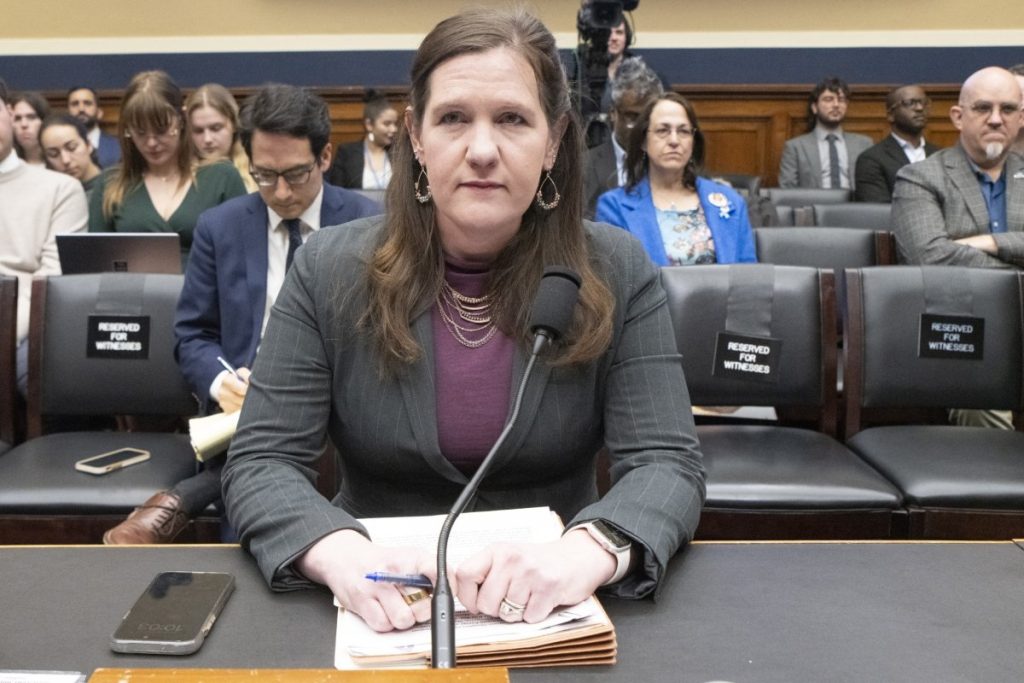


U.S. Chief Justice John Roberts has temporarily allowed President Donald Trump to oust a Democratic member of the Federal Trade Commission, signaling that the Supreme Court may ultimately side with Trump in his effort to assert control over the independent agency.
Rebecca Kelly Slaughter, the FTC’s sole Democrat, had briefly returned to her position last week following a federal appeals court ruling in her favor. Roberts’ order, issued without explanation, nullifies that decision at least until the full Supreme Court addresses the case. The order also set a September 15 deadline for Slaughter’s legal team to respond to the Justice Department’s request to extend her removal while the legal dispute over the merits proceeds.
The Trump administration is asking the Supreme Court to grant full review and potentially overturn a 1935 precedent, Humphrey’s Executor, which allows Congress to create independent agencies and protects their leaders from arbitrary removal. The original ruling arose from President Franklin Delano Roosevelt’s firing of a Republican FTC commissioner.
The FTC and Slaughter did not immediately respond to requests for comment. The dispute mirrors Trump’s broader efforts to assert authority over independent federal officials, including his recent attempt to remove Federal Reserve Governor Lisa Cook over alleged mortgage fraud, though that case raises distinct legal questions. In the FTC matter, Trump argues that he has the constitutional right to fire Slaughter at will.
Trump initially sought to remove Slaughter in March. She challenged the move in court, asserting that her removal violated the FTC Act, which permits presidents to dismiss commissioners only for cause, such as inefficiency or neglect of duty. A federal judge ruled in her favor in July, but her status has remained uncertain since then.
The conservative-majority Supreme Court has gradually narrowed the scope of Humphrey’s Executor in recent years, emphasizing that powerful executive branch officials must remain accountable to the president. In May, the court allowed Trump to remove members of the National Labor Relations Board and the Merit Systems Protection Board, issuing a temporary order similar to Roberts’ current action. The decisions, issued over dissents from the court’s three liberal justices, suggest a growing willingness to expand presidential authority over independent agencies while still limiting the president’s power over Federal Reserve leadership.
In those previous cases, the court indicated that while Trump could remove NLRB and MSPB officials at will, he would not have the authority to fire Federal Reserve Chair Jerome Powell without cause, a distinction that also applies to Governor Cook. Advocates of Humphrey’s Executor argue that the Constitution empowers Congress to create agencies staffed by independent experts, ensuring they can operate free from political pressure from the White House.
The Supreme Court will ultimately decide the fate of Slaughter’s removal in the case Trump v. Slaughter, 25A264.


 Pump Radar
 Stock Alerts