
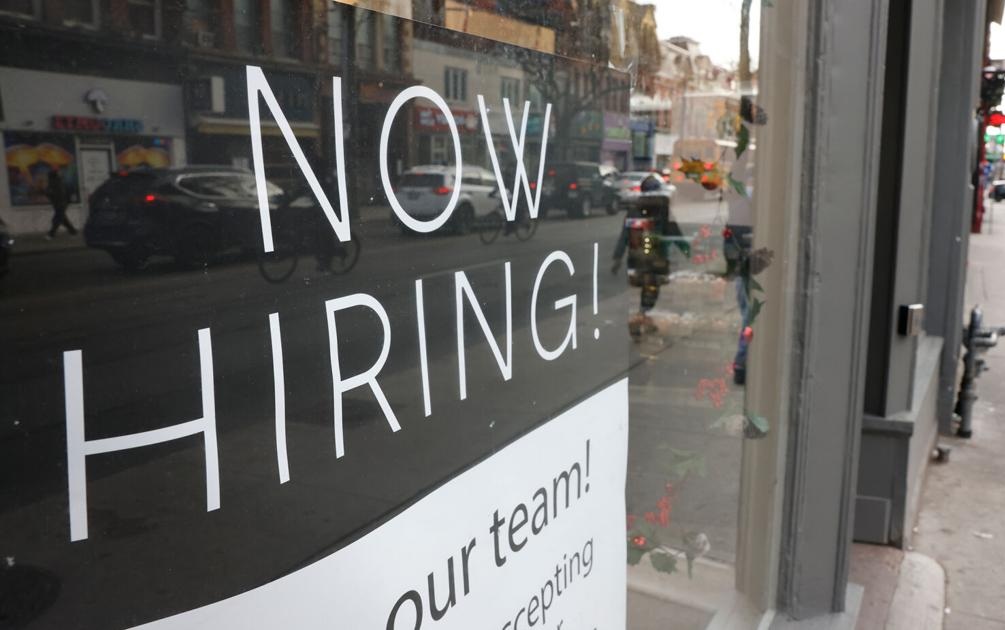


U.S. job openings dropped to a 10-month low in July, and for the first time since the COVID-19 pandemic, there were more unemployed workers than available positions, highlighting a gradual cooling in the labor market. The data, released Wednesday by the Labor Department, are consistent with a labor market that is easing and support expectations that the Federal Reserve could consider cutting interest rates at its upcoming September meeting.
Despite the slowdown in hiring demand, layoffs remain relatively low, and fewer workers are switching jobs, signaling that while labor demand is softening, the market retains pockets of stability. The Labor Department’s Job Openings and Labor Turnover Survey (JOLTS) reported that there were 0.99 job openings for every unemployed person in July, down from 1.05 in June. This is the first time the ratio has fallen below one since April 2021, when the economy was emerging from the pandemic-induced slump.
Economists point to several factors behind the slower pace of labor demand. President Donald Trump’s broad import tariffs have put pressure on businesses, while tighter immigration policies have constrained the supply of workers. “The deterioration highlights the gradual erosion in what has remained a generally healthy labor market through the Fed’s efforts to corral inflation these past few years,” said Sarah House, senior economist at Wells Fargo. “Although economic policy uncertainty has receded somewhat since spring, slower consumer spending and cost pressures linked to tariffs are likely to keep businesses cautious in hiring and prompt them to seek cost savings wherever possible, including through workforce adjustments.”
In raw numbers, total job openings fell by 176,000 to 7.181 million by the end of July, the lowest level since September 2024 and more than 300,000 below June’s figures. Economists surveyed by Reuters had forecast 7.378 million unfilled positions. Sector-by-sector analysis shows healthcare and social assistance vacancies declined by 181,000 for the second consecutive month, signaling a slowdown in the sector that has recently been the primary engine of employment gains. Retail positions dropped by 110,000, and arts, entertainment, and recreation roles fell by 62,000. Meanwhile, professional and business services openings declined by 56,000, offset in part by gains in construction, manufacturing, financial activities, and federal government positions—the latter likely reflecting recruitment for immigration enforcement roles. The overall job openings rate decreased to 4.3% from June’s 4.4%.
Hiring growth remained modest, increasing by 41,000 to 5.308 million, with gains primarily in wholesale trade, manufacturing, and other services. Conversely, hiring declined in leisure and hospitality, transportation, warehousing and utilities, and healthcare and social assistance. The overall hires rate held steady at 3.3%. Layoffs rose slightly by 12,000 to 1.808 million, largely in the construction sector, but fell by 130,000 in professional and business services, leaving the layoffs rate unchanged at 1.1%. Analysts note that this relatively low level of separations continues to anchor the labor market, despite slower hiring.
Looking ahead, economists anticipate the government’s upcoming employment report for August will show nonfarm payrolls increasing by 75,000 after July’s 73,000 gain. By comparison, the labor market added an average of just 35,000 jobs per month over the past three months, down sharply from 123,000 during the same period last year. The unemployment rate is expected to tick up slightly to 4.3% from 4.2% in July.
Federal Reserve Chair Jerome Powell has signaled the possibility of a rate cut at the central bank’s September 16-17 meeting, noting elevated labor market risks while emphasizing that inflation remains a concern. The Fed has kept its benchmark overnight interest rate at 4.25%-4.50% since December. Financial markets are currently pricing in a potential rate cut, with upcoming employment data for August and next week’s consumer price report expected to provide further guidance on the Fed’s next moves.
Some economists, however, caution that the labor market remains fundamentally resilient. The decline in job openings, they note, has been concentrated in healthcare and social assistance, rather than a broad-based weakening. “While this report may be highlighted by those advocating for rate cuts this month, it does not signal a weak or deteriorating labor market,” said Conrad DeQuadros, senior economic advisor at Brean Capital. Supporting this view, the quits rate—the share of workers voluntarily leaving their jobs—remained steady at 2.0% for the fourth consecutive month, suggesting that employees continue to feel reasonably confident in their job prospects.


 Pump Radar
 Stock Alerts