
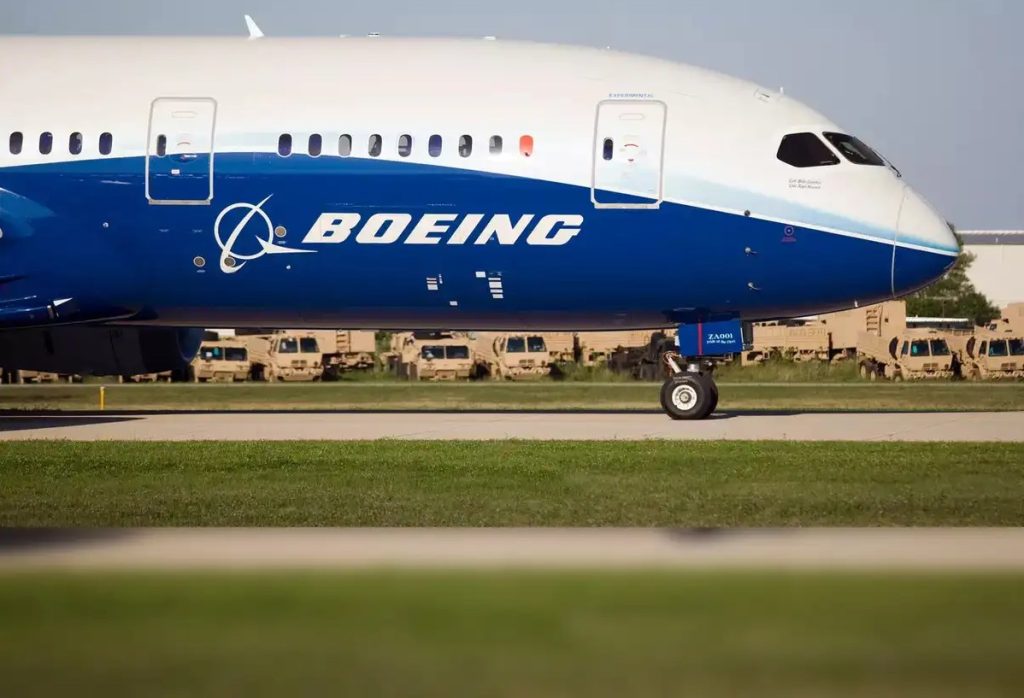


A bipartisan group of U.S. lawmakers on a rare visit to Beijing raised discussions with Chinese leaders about a potential major aircraft purchase that could see China commit to buying more Boeing jets, U.S. Democratic Representative Adam Smith said at a press conference on Tuesday.
U.S. Ambassador to China David Purdue said he believes the negotiations are approaching their final stages, describing the deal as “very important to the president.” Reports last month from Bloomberg indicated Boeing is in talks to sell as many as 500 aircraft to China, a move that would mark a significant breakthrough for the company in the world’s second-largest aviation market, which has seen new orders stall amid ongoing U.S.-China trade tensions.
“It’s been a while since Boeing airplanes have been sold here in China. We’d like to get that deal done,” Smith said, who is leading the delegation. “It’s a good company, good product, hope you get back to selling airplanes in China.”
The visit, which began on Sunday, is the first House of Representatives delegation to China since 2019, after U.S.-China relations deteriorated during the coronavirus pandemic. It follows a Friday discussion between President Donald Trump and Chinese President Xi Jinping as the two largest global economies seek to improve relations beyond their existing tariff truce.
Boeing has historically been one of the largest U.S. exporters to China, sending roughly a quarter of its planes there, though it has not secured a major Chinese purchase since Trump’s first term. Purdue noted that he visited Boeing’s production facility in Tianjin last week, a city approximately 150 kilometers southeast of Beijing.
During the visit, lawmakers met China’s second-ranking official Li Qiang on Sunday, followed by discussions with economic chief He Lifeng and Defense Minister Dong Jun on Monday. The meetings also touched on military dialogue, with Smith emphasizing the need to maintain clear communication between the two countries’ defense establishments.
“I think when you’re getting up into the hundreds, close to a thousand nuclear weapons, it’s time to start having a conversation about it to make sure we understand each other and we don’t stumble into any sort of conflict,” Smith said during the press conference at the U.S. embassy in Beijing.
Smith serves as the top Democrat on the House Armed Services Committee, which oversees the U.S. Department of Defense and armed forces. While tariffs remain a contentious issue—Trump earlier this year imposed duties on China exceeding 100% before partially rolling them back—other points of tension persist. These include U.S. restrictions on semiconductor chips, China’s activities in the South China Sea, questions surrounding Taiwan, and debates over TikTok ownership, all of which continue to cloud U.S.-China relations.
Another member of the delegation, Democratic Representative Ro Khanna, whose district includes Silicon Valley, highlighted concerns around technology and economic competition with China.
If finalized, the Boeing deal could not only boost the company’s presence in China but also serve as a signal of improving trade relations between Washington and Beijing, even as strategic and geopolitical tensions remain.

 Pump Radar
 Stock Alerts