
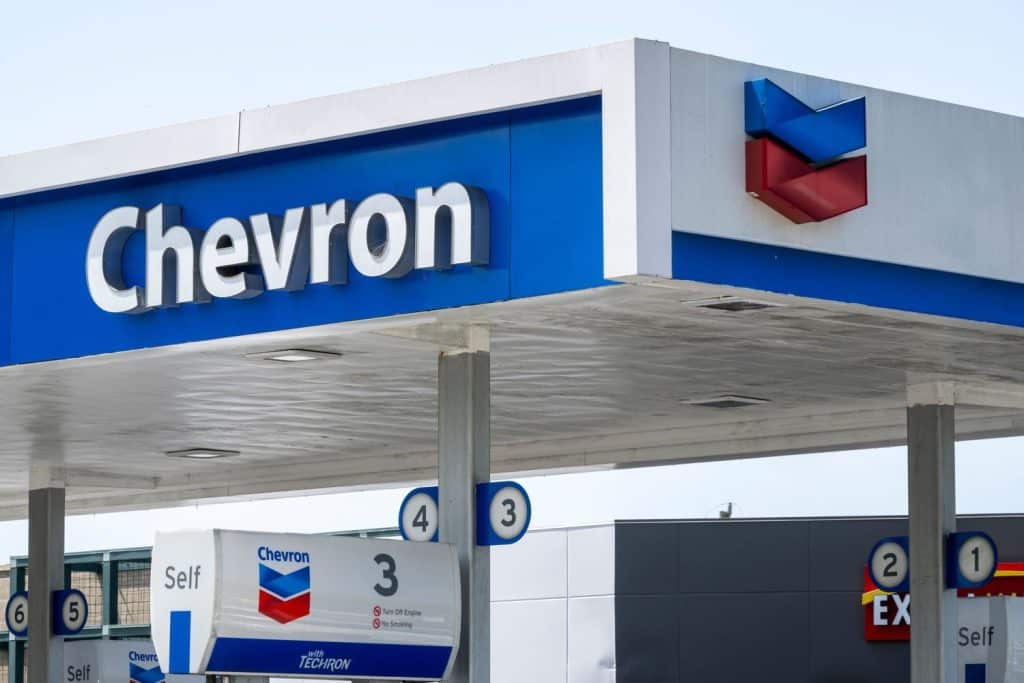


The U.S. has reinstated Chevron Corp.’s license to resume oil production in Venezuela, reversing a decision made just two months ago as the Trump administration sought to increase pressure on President Nicolás Maduro’s regime.
The authorization, which hasn’t been publicly detailed, was confirmed by people familiar with the matter. It came alongside a separate diplomatic breakthrough: a deal that saw Venezuela release 10 detained Americans, while 250 Venezuelans held in El Salvador were repatriated.
Key to the Chevron agreement, according to sources, is a condition that no royalties or taxes from its operations benefit Maduro’s government.
The decision reflects the complex balancing act President Trump faces between maintaining pressure on authoritarian regimes and stabilizing energy markets. While Trump has taken a hard line against Maduro—and continues to pressure Iran and Russia—he’s also mindful of the impact oil prices have at home. Venezuela, like Iran and Russia, is a major oil producer, and the White House has hinted at further sanctions on countries still buying Russian crude.
Oil prices dipped slightly on the news, as markets weighed the potential for increased global supply. Brent crude was up 1% at $69.19 per barrel as of 2:39 p.m. New York time.
A White House spokesperson declined to comment. The Wall Street Journal first reported the move.
“Chevron conducts its business globally in compliance with laws and regulations applicable to its business, as well as the sanctions frameworks provided for by the U.S. government, including in Venezuela,” said company spokesman Bill Turenne.
Chevron, the only major U.S. oil firm still operating in Venezuela, has long played a critical role in the country’s battered energy sector. Although it was granted a restricted license by the Biden administration in 2022 to maintain operations and export crude, that license was revoked in May after Trump returned to office.
At the time, internal debates split the administration. Special envoy Ric Grenell and others advocated for a transactional relationship with Maduro, while Senator Marco Rubio pushed for a tougher stance. Hawks ultimately prevailed, and Chevron’s license was pulled—later replaced with a limited permit allowing only maintenance work.
How Venezuela plans to allow Chevron to restart operations without state revenue remains unclear. In April, PDVSA ordered the return of nearly 1 million barrels of crude, citing “impossibility and restrictions” related to payment.
The timing of the license restoration may blunt its short-term impact. U.S. refiners may not fully benefit from Chevron’s heavy crude exports, as the summer driving season winds down and maintenance season begins. As of late May, Chevron’s joint ventures in Venezuela were producing more than 240,000 barrels per day—roughly a quarter of the country’s total output.
In 2024, the U.S. imported around 250,000 barrels per day of Venezuelan crude, mainly for Gulf Coast refineries. Valero Energy Corp. was the top importer, followed by Chevron, which refines some of the oil for its own operations.

 Pump Radar
 Stock Alerts