
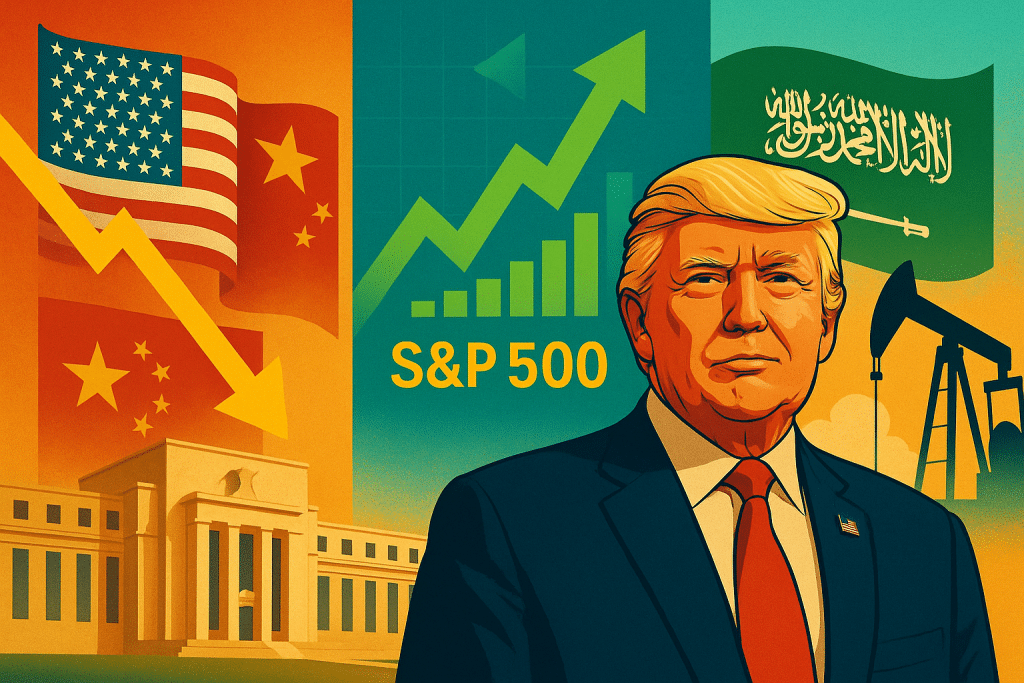


In an increasingly interconnected global economy, policy signals from Washington and beyond can shift the tides of the financial markets overnight. Over the past week, investors were treated to a powerful cocktail of geopolitical developments and domestic policy signals that lifted market sentiment and reignited appetite for risk assets. Two headlines dominated the narrative: a de-escalation in the U.S.–China trade conflict and President Trump’s unexpected diplomatic overture in the Middle East.
Together, these events created a relief rally across equity markets — and underscored how markets are now finely tuned to both tariff rhetoric and oil diplomacy.
The Trade War Gets a Timeout
The biggest driver of last week’s rally was the U.S.–China tariff “truce”, a deal struck quietly over the weekend and confirmed by both governments. After months of escalating tariffs and bruising rhetoric, Washington and Beijing agreed to temporarily roll back some of the most punishing duties that had strained global supply chains and fanned inflation fears.
Under the agreement, U.S. tariffs on Chinese imports were reduced from 50% to 30%, while Chinese tariffs on U.S. goods dropped from 125% to 10%. That’s not a full reversal, but it’s a material shift from the high-pressure trade standoff that dominated much of the year.
Markets responded swiftly. Futures popped Sunday night, and by Monday morning, U.S. equities opened in the green. The S&P 500 climbed over 1.4% by market close, led by semiconductor stocks, exporters, and retailers — all of which had suffered under the weight of the tariff barrage.
Investors interpreted the truce as a signal that cooler heads may be prevailing, and more importantly, that some of the inflationary pressure baked into the economy could ease. Tariffs had driven up the cost of imported components, which manufacturers passed on to consumers. That inflation was at the center of the Federal Reserve’s ongoing battle with rates — and gave the Fed little room to maneuver.
By pulling tariffs back, the White House effectively gave the Fed more breathing space — and markets loved it.
Oil Prices Tumble on Strategic Saudi Move
While the trade truce grabbed headlines, another equally important development unfolded quietly: Saudi Arabia’s oil output surged just days ahead of President Trump’s visit to Riyadh.
According to Reuters, Brent crude prices dropped from around $82 per barrel in January to approximately $60 by early May, recovering slightly to $66 by mid-month. That price movement coincided not only with broader commodity trends but with a deliberate increase in output by OPEC+, led by Saudi Arabia.
This wasn’t a coincidence.
Sources close to the matter told Reuters that the output boost was timed to Trump’s visit, in an effort to blunt the inflationary effects of energy costs in the U.S. The logic? Lower energy prices cushion the average American household, counteracting some of the cost burdens from tariffs and supply constraints.
While energy sector stocks dipped slightly on the news, the broader impact was positive. Lower fuel prices reduce shipping costs, manufacturing inputs, and household expenses — all of which help stabilize CPI and improve consumer confidence. As a bonus for the White House, it reduces pressure on the Fed to keep raising rates aggressively.
Defense Deal Diplomacy and Middle East Stability
Trump’s visit to Saudi Arabia from May 12 to May 14 wasn’t just about oil. During his trip, the U.S. and Saudi Arabia signed a $142 billion defense deal, part of a sweeping investment package that signaled stronger bilateral ties.
This agreement had both economic and strategic resonance. Economically, it promises new manufacturing contracts and tech exports from U.S. firms in defense, aerospace, and cybersecurity. Strategically, it reinforced the U.S.’s alignment in the Gulf — a region roiled by conflict in Gaza and ongoing Iranian tensions.
What markets noticed most, however, was the broader de-escalation narrative. Trump’s personal diplomacy appeared to ease concerns that the Gaza conflict would spiral further. For equity traders, that meant less headline risk and lower geopolitical volatility — both favorable conditions for equities.
The Fed in the Background
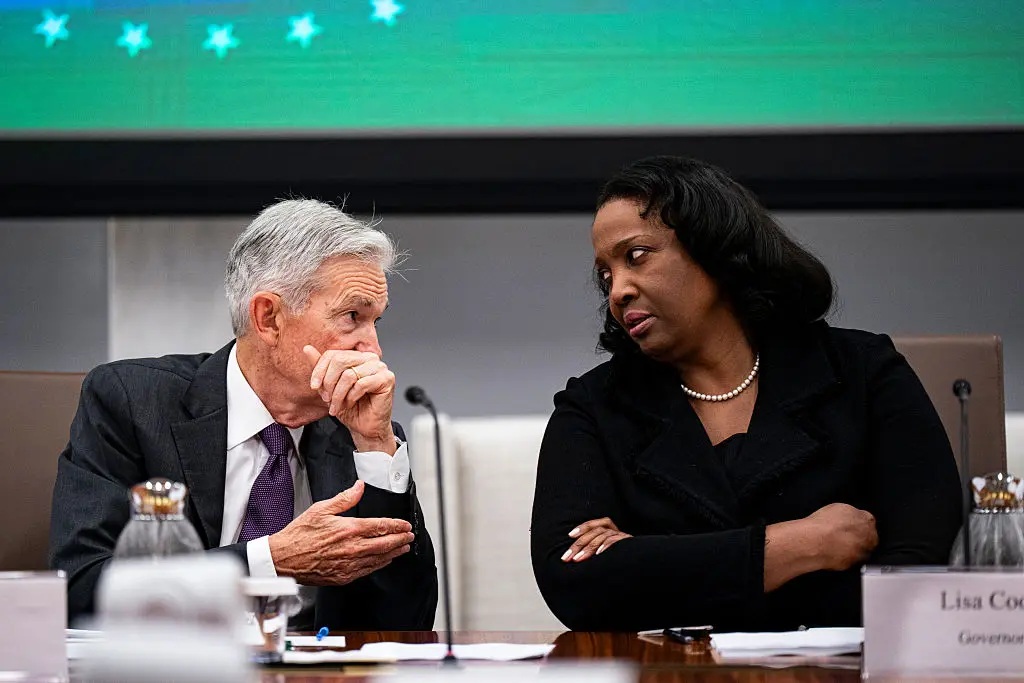
While international diplomacy took center stage, the Federal Reserve remained the invisible hand behind market sentiment. For months, the Fed had walked a tightrope: raising interest rates to fight inflation, while avoiding a hard landing for the economy.
With tariffs easing and energy prices falling, some of the inflationary pressures driving the Fed’s tightening cycle are now retreating. Traders now see a more dovish outlook from the central bank, especially if CPI data in the coming weeks confirms a slowing trend.
This shift was reflected in bond yields, which dipped slightly midweek, and in the renewed appetite for tech and growth stocks, which are typically rate-sensitive.
What It All Means for Investors
Taken together, these developments created a perfect storm — or rather, a perfect calm — that supported a broad-based rally in U.S. stocks. The Dow Jones climbed over 400 points, the NASDAQ rebounded from last week’s dip, and the S&P 500 broke back above 5,100, a level closely watched by technical traders.
Sectors that had been battered by inflation, such as consumer discretionary, manufacturing, and logistics, led the charge. Meanwhile, defense stocks also rose in anticipation of new contract flows from the U.S.–Saudi agreement.
Still, caution is warranted. The tariff rollback is temporary, and any breakdown in trade talks could reverse gains quickly. Likewise, the Middle East remains a volatile region, and oil prices are subject to a host of unpredictable forces.
But for now, the message is clear: Markets like stability. And last week, between diplomacy, energy strategy, and trade negotiations, they got a rare dose of it.
Bottom Line:
Cooling inflation data, falling oil prices, and a softening in tariff rhetoric gave markets exactly what they needed — a reason to believe that rate hikes may pause, trade may stabilize, and risk assets might still have room to run.
Stay tuned. The next Fed meeting could bring confirmation — or another surprise.

 Pump Radar
 Stock Alerts