
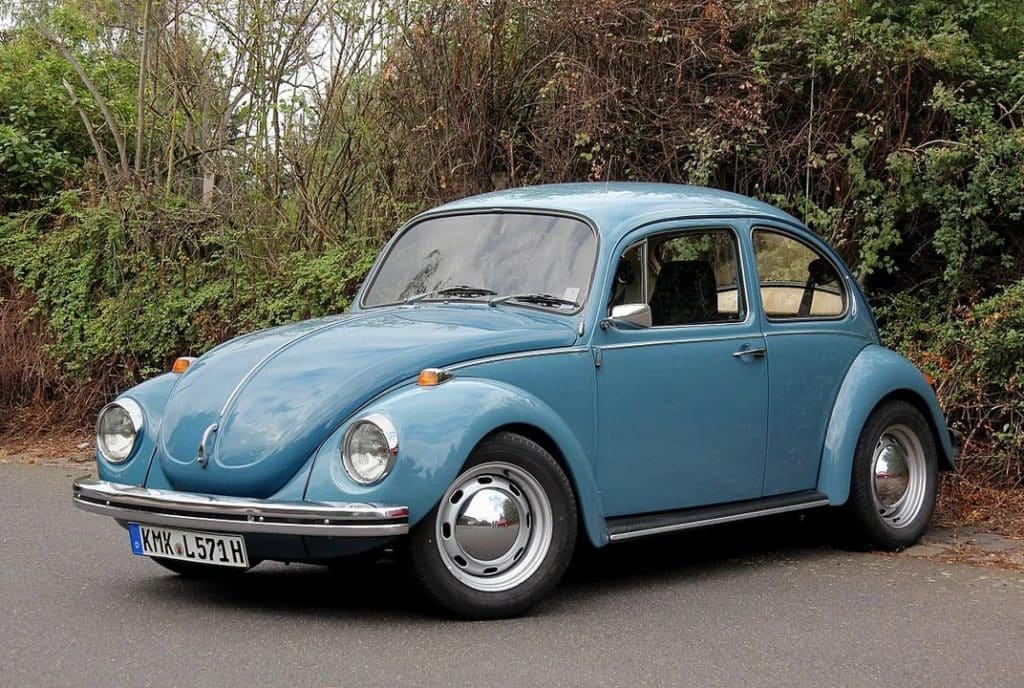


Volkswagen lowered its full-year guidance on Friday after taking a $1.5 billion hit from U.S. import tariffs in the first half of 2025. The German auto giant also posted weaker-than-expected second-quarter results, as it faces mounting challenges across the global auto industry.
Operating profit for the quarter dropped 29% to 3.83 billion euros ($4.49 billion), falling short of the 3.94 billion euro consensus forecast, according to FactSet. Revenue also missed expectations, coming in at 80.8 billion euros versus the projected 82.2 billion.
The company said U.S. tariffs alone cost it 1.3 billion euros in the first six months of the year. An additional 700 million euros in restructuring provisions further weighed on performance.
Looking ahead, Volkswagen now expects its 2025 operating return on sales to fall between 4% and 5%, down from its previous forecast of 5.5% to 6.5%. It also sees full-year sales remaining flat compared to 2024, revising down from an earlier projection of up to 5% growth.
The results come as European automakers grapple with fierce competition from Chinese rivals and tariff threats from U.S. President Donald Trump, who recently proposed raising duties on EU auto imports to 30% starting August 1.
“If you look at the first half of the year, you see basically a mixed picture,” Arno Antlitz, chief financial officer at Volkswagen, told CNBC’s “Squawk Box Europe” on Friday.
“First and foremost, you see tremendous success of our products, both on the combustion engine side and on the electric vehicle side. In Europe, every fourth vehicle comes from the Volkswagen Group, but as you said, our numbers are significantly down,” he added.
Antlitz noted that Volkswagen’s push into electric vehicles (EVs) has pressured profit margins, as EV margins remain below those of traditional internal combustion engine (ICE) models. He also cited one-off costs, such as tariffs and restructuring measures, totaling about 2 billion euros.
Volkswagen sold 80.8 million vehicles in Q2, down 3% from a year earlier. However, order intake in Western Europe rose 19% in the first half of the year. The company expects to maintain an automotive investment ratio of 12% to 13% for the full year.
With trade tensions escalating, Volkswagen assumes the current 27.5% U.S. tariff will remain in place through the second half of 2025, though it warned of “high uncertainty” around future trade policy.
Shares of Volkswagen rose 3.9% Friday, recovering from earlier losses.
Rico Luman, senior sector economist at ING, said Volkswagen’s strength in Europe is providing some cushion.
“Yes, they struggled to keep up in the export market, but at least [the] home market is doing well at the moment. They are ramping up EV sales. It’s now hitting 11% on a global level of its total sales — and in Europe it is already much more,” Luman told CNBC.
“They possibly might have benefitted from deteriorated Tesla sales but still it is doing quite well at the moment in Europe,” he added.


 Pump Radar
 Stock Alerts