
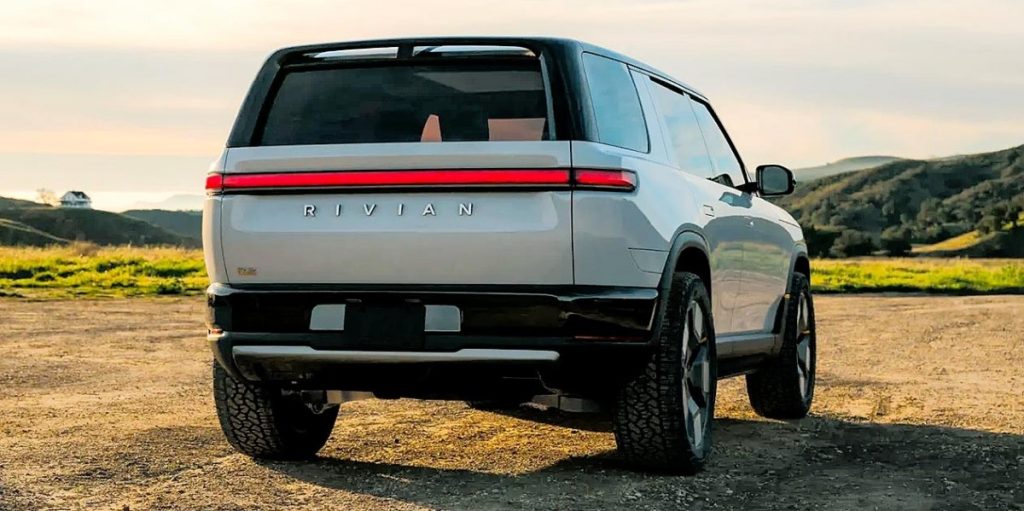


Volkswagen has moved forward with its substantial investment in Rivian, delivering a second $1 billion tranche to the American EV maker after Rivian met key financial targets. The fresh capital strengthens a critical alliance for Rivian, which continues to face financial headwinds, while offering Volkswagen a potential remedy for its long-standing software development struggles.
This latest investment is part of a broader $5.8 billion agreement forged last year, designed to eventually make Volkswagen Rivian’s largest shareholder — surpassing Amazon — contingent upon Rivian meeting a series of performance benchmarks. Following this second installment, Volkswagen’s stake will increase from its initial 8.6% position, though the exact updated percentage has not been disclosed.
At the core of the partnership is a joint venture named Rivian Volkswagen Technologies, which will receive $2.3 billion from the total investment. Its mission is to co-develop the next-generation software and electronic systems for both companies’ EVs. “It’s no secret in the automotive world that Volkswagen has struggled to develop cutting-edge vehicle software in-house,” a reality that has led to major delays and complications in its EV rollout.
While framed as a mutual collaboration, many industry analysts believe Volkswagen stands to gain the most from the partnership. The first visible product of the alliance is expected to be the VW ID.1 — a compact electric vehicle slated for a 2027 debut. The car is targeted to start at around $23,000, with production scheduled to begin in Portugal in September of that year.
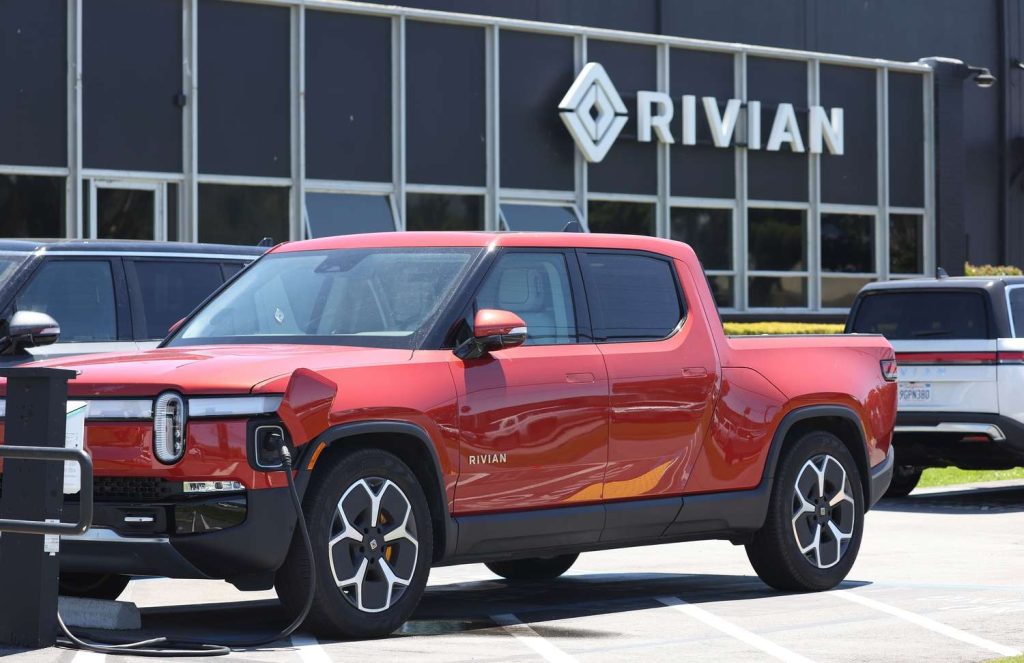
For Rivian, the steady flow of German capital is nothing short of essential. Known for its R1T pickup and R1S SUV, Rivian has yet to achieve annual profitability. The company did post a gross profit in both Q4 2024 and Q1 2025 — the achievement required to trigger Volkswagen’s latest payment — but it still forecasts a 2025 adjusted EBITDA loss between $1.7 billion and $1.9 billion.
Rivian’s latest delivery report showed a 23% decline in Q2 2025 compared to the same period last year, with 10,661 vehicles delivered. The company attributed the slowdown to plant retooling in Normal, Illinois, to prepare for upcoming 2026 models. Additionally, demand for the premium R1 line has softened, potentially due to pricing concerns, while tariffs on parts and materials have further complicated production and logistics. As a result, Rivian has lowered its full-year delivery forecast to 40,000–46,000 vehicles.
Looking forward, Rivian’s growth strategy hinges on the success of its more affordable R2 and R3 models. The R2, a $45,000 crossover, is expected to begin production in 2026 and represents Rivian’s first genuine attempt at a mass-market vehicle. Funding from Volkswagen is anticipated to provide the financial runway needed to bring both the R2 and smaller R3 to market and steer Rivian toward long-term profitability.
Future funding from Volkswagen will depend on Rivian meeting not just financial, but also technological goals. Another $1 billion is expected in 2026, with a final $500 million installment tied to the successful production launch of the first VW model using Rivian’s technology.
 Pump Radar
 Stock Alerts