


Sweden’s Volvo Cars (VOLCAR-B.ST) is accelerating its U.S. production efforts in a strategic move to localize manufacturing, sidestep potential tariffs, and better serve one of its largest markets. The announcement on Tuesday sent Volvo’s shares in Stockholm up more than 3%, reflecting investor confidence in the automaker’s U.S.-focused growth strategy.
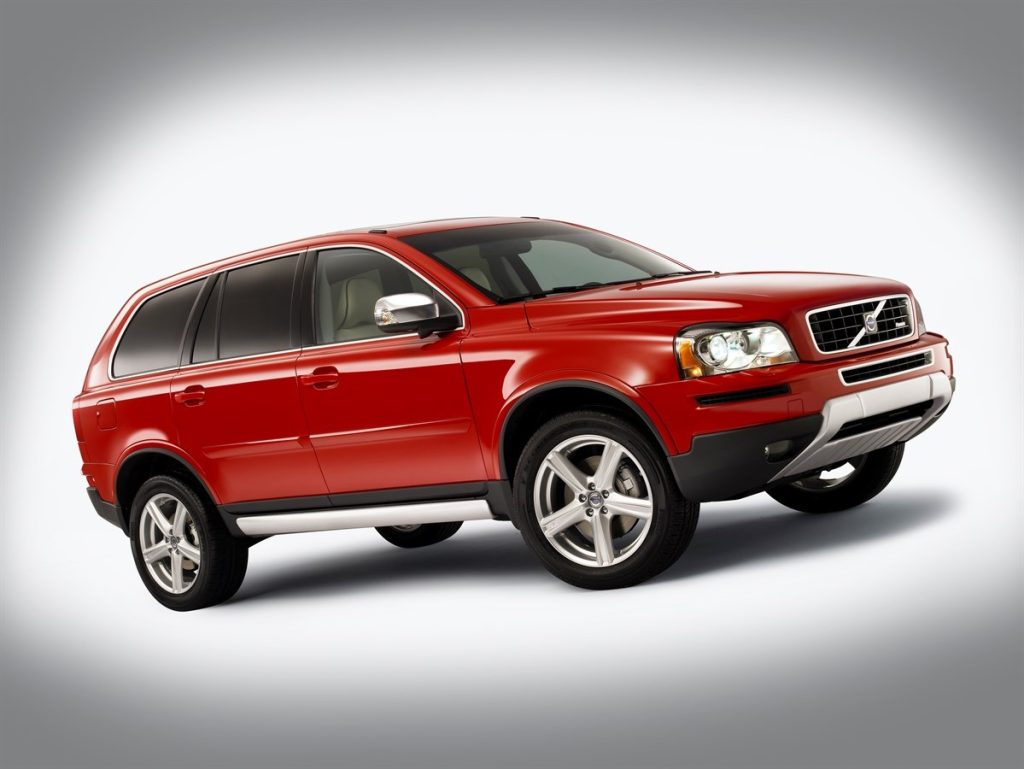
Volvo, which is fully owned by China’s Geely, revealed plans to introduce a fourth vehicle to its Ridgeville, South Carolina, production facility: a next-generation hybrid model designed specifically for U.S. consumers. While Volvo has not disclosed full details about the new model, analysts and industry observers anticipate it will likely be a large crossover SUV, a segment that has been seeing strong demand in the United States.
This expansion follows Volvo’s announcement earlier this summer that it would begin producing its bestselling XC60 midsize SUV at the South Carolina plant by late 2026. The XC60, currently manufactured in Gothenburg, Sweden, has been a key driver of Volvo’s U.S. sales. Over the first eight months of 2025, Volvo sold more than 27,000 XC60s stateside, representing nearly a 20% increase from the prior year.
The Ridgeville plant currently produces the fully electric Volvo EX90 SUV, along with its sibling, the Polestar 3, and has an installed capacity of 150,000 vehicles per year. Volvo’s total investment in the South Carolina facility now stands at $1.3 billion, a figure the company says underscores its long-term commitment to the U.S. market and local manufacturing.
“Our investment plans once again reinforce our long-term commitment to the U.S. market and our manufacturing operations in South Carolina,” said Volvo Cars CEO Håkan Samuelsson in a statement. Samuelsson, who returned to lead Volvo in March 2025 after previously heading the company from 2012 to 2022, highlighted the importance of regionalized production to meet consumer needs.
Volvo’s global production footprint extends beyond Ridgeville and Gothenburg to facilities in Chengdu, Daqing, and Taizhou in China, as well as Ghent, Belgium. The automaker has said its regionalization efforts are aimed at responding more directly to local customer demands while mitigating the risks associated with global trade tensions.
Indeed, President Donald Trump’s tariffs on imported vehicles have accelerated Volvo’s shift toward U.S.-based production. While tentative trade agreements could reduce EU vehicle tariffs to 15% from the current 27.5%, high tariffs on Chinese imports—100% in some cases—have made local production in Europe and the U.S. essential. Volvo, for example, relocated production of its EX30 EV from China to Ghent to circumvent these tariffs, and Polestar has ceased selling its China-made Polestar 2 sedan in the U.S. earlier this year.
“The tariffs have accelerated this process, it would be fair to admit that,” Samuelsson told the New York Times, emphasizing that a stronger U.S. manufacturing presence is both a defensive and strategic move.
By expanding its South Carolina operations and introducing a hybrid model designed specifically for the American market, Volvo aims to strengthen its position in a key market segment, avoid potential trade barriers, and continue its growth trajectory in the U.S., where demand for both hybrid and electric vehicles is rising steadily.
 Pump Radar
 Stock Alerts