
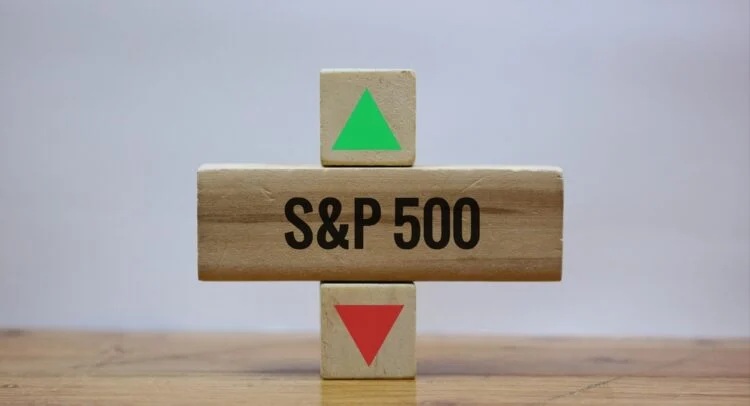


A leading Wall Street strategist has grown increasingly bullish on the S&P 500 (^GSPC), citing the transformative potential of artificial intelligence as a driver of both earnings and market valuations. Evercore ISI strategist Julian Emanuel raised his 2025 year-end price target for the benchmark index to 6,250 from 5,600 and now projects the S&P 500 could climb roughly 20% to 7,750 by the end of 2026, fueled by what he calls a once-in-a-generation technological shift.
While his near-term outlook anticipates a modest pullback from current levels, Emanuel’s longer-term view underscores the expectation that AI adoption will boost productivity and corporate profits across a broad range of industries. He also outlined a more aggressive “bull case,” in which the S&P 500 could reach 9,000 if an AI-driven asset bubble emerges—a scenario potentially exacerbated by an overly accommodative Federal Reserve, even as inflation pressures persist. Emanuel emphasized that market corrections of 10% or more are possible along the way but should be treated as buying opportunities within what he sees as a structural bull market.
“Twice in a lifetime,” Emanuel wrote in a recent note, comparing the current AI-fueled rally to the internet boom of the 1990s. He argued that AI adoption is occurring more rapidly and across a wider set of industries than the internet revolution, creating broader investment opportunities. Alongside his S&P targets, Emanuel raised his earnings forecasts to $264 per share for 2025, up from $255, and $287 for 2026, up from $272, reflecting both resilience to trade tensions and the productivity lift provided by AI technologies.
Emanuel’s forecasts align with a broader Wall Street narrative that corporate earnings remain the primary driver for equities. FactSet data released Friday shows that, with 98% of S&P 500 companies having reported, second-quarter earnings are on track to rise 11.9% year over year, marking the third consecutive quarter of double-digit growth. Positive surprises have been widespread, with 81% of companies beating EPS estimates, while the so-called “Magnificent Seven” stocks continue to outperform, posting 26.6% earnings growth compared with 8.1% for the rest of the index.
Citi, which maintains a 6,600 year-end target for the S&P 500, reiterated its full-year earnings outlook of $272, citing policy support, resilient consumer spending, and the recently enacted “One Big, Beautiful Bill” as tailwinds. Scott Chronert, head of Citi’s U.S. equity strategy team, noted that markets could experience bouts of volatility as the year progresses, warning that Q3 earnings could prove “noisy” after strong second-quarter beats. Chronert also highlighted ongoing legal uncertainty after a federal appeals court late Friday struck down most of President Trump’s global import tariffs, ruling that the executive orders exceeded his authority. The 7-4 decision leaves tariffs in place while the administration appeals to the Supreme Court.
Despite the legal developments, Chronert said, “All told, the tariff-related news flow, as of now, does not really change our playbook into year-end.” He added that a removal of tariffs could ease margin pressure for companies, but would also eliminate a revenue stream previously viewed by investors as partially offsetting the federal deficit—a dynamic that could reignite fiscal concerns even as earnings improve.
The broader macroeconomic backdrop adds another layer of complexity. Long-term Treasury yields edged higher on Tuesday, with the 30-year (^TYX) rising about five basis points to 4.97%, approaching the psychologically significant 5% level often cited as a potential headwind for equities. Meanwhile, markets have shifted focus back to monetary policy amid expectations that the Federal Reserve may lower interest rates this month. Chair Jerome Powell signaled the possibility of a rate cut in his recent Jackson Hole speech, but the case for easing will be tested by Friday’s August jobs report, following recent disappointing inflation data and signs of labor market weakness. Current market pricing reflects roughly a 90% probability of a 25-basis-point cut in September, though incoming economic data could influence expectations for a larger reduction. The Fed’s decision on September 17 will be closely watched to gauge the level of support available to investors going forward.

 Pump Radar
 Stock Alerts