
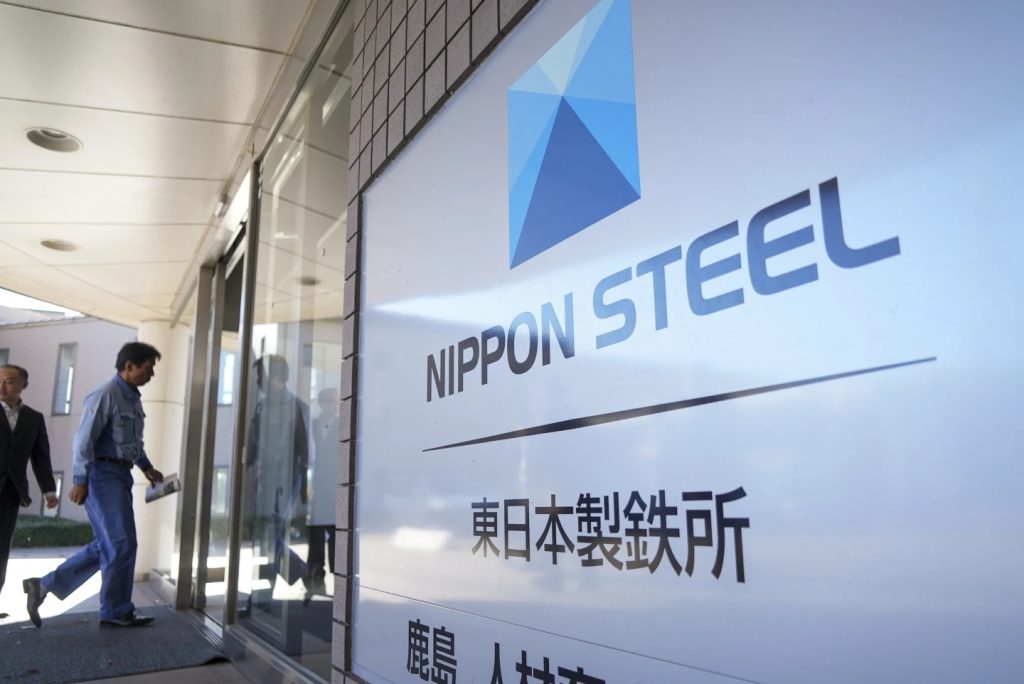


The White House said Monday that it used a new national security agreement to prevent U.S. Steel from ending raw-steel processing at its Granite City Works facility in southern Illinois, a plant that has long been a symbol of American industrial might.
In a statement, the administration said Commerce Secretary Howard Lutnick personally informed executives that President Donald Trump was prepared to invoke his so-called “golden share” authority — a special veto power written into the terms of Nippon Steel’s buyout of U.S. Steel — to block the company’s plan. That authority was a central concession in the Trump administration’s decision three months ago to clear the $14.9 billion takeover of the Pittsburgh-based steelmaker by Japan’s Nippon Steel.
The “golden share” provision gives the federal government an extraordinary say over key corporate decisions affecting domestic steel production, including closing, idling, or repurposing U.S. Steel plants. According to the White House, it was crafted specifically to address national security concerns raised by lawmakers and unions when the foreign acquisition was first announced.
“The administration did intervene to block U.S. Steel’s decision to idle the Granite City Works plant, with the threat of the president invoking his golden share authority,” the White House said Monday.
Earlier this month, U.S. Steel announced plans to stop processing steel slabs at Granite City Works, located just outside St. Louis, saying it would “optimize” operations by shifting slab processing to its Mon Valley Works in Pennsylvania and Gary Works in Indiana. The move was widely expected after years of gradual cutbacks at the Illinois plant: U.S. Steel idled one of its two blast furnaces there in 2019 and shut down the remaining furnace in 2023, effectively ending primary steelmaking at the site.
At the time of the announcement, the company said no layoffs or pay cuts were planned for the roughly 800 workers at Granite City, a point intended to soften the blow of losing slab processing.
But by Friday, following what the White House described as direct intervention, U.S. Steel abruptly reversed course. It said it would continue supplying raw steel slabs to Granite City “indefinitely” and had “found a solution to continue slab consumption at Granite City.” The company did not specify what that solution entailed and declined to address the administration’s claim that it had blocked the move.
“The Trump administration is a great friend to the American steel industry, and we have ongoing positive and productive conversations with them on a variety of topics, but we do not plan to discuss the details of any of those conversations,” U.S. Steel said in a statement.
The United Steelworkers union — which had strongly opposed Nippon Steel’s acquisition of U.S. Steel — accused the company of trying to “wiggle out” of commitments that the Japanese conglomerate made when negotiating with the White House. Union leaders argue that keeping Granite City Works active was one of the core assurances in the national security deal.
For its part, U.S. Steel said it remains fully compliant with all provisions of the agreement with Nippon Steel and the administration.
Under the deal’s terms, special protections for Granite City Works expire in 2027, while protections for other U.S. Steel facilities run through 2035.
Granite City Works, which dates back more than a century, produces rolls of sheet steel used across the construction, container, pipe, and automotive industries. The plant’s fortunes have risen and fallen with the U.S. manufacturing cycle, making it a bellwether for the nation’s steel sector.
By deploying its “golden share” power so soon after the Nippon Steel transaction closed, the Trump administration signaled that it intends to use the new authority aggressively to keep U.S. production capacity intact — even at plants where steelmaking has already slowed dramatically.
Industry observers said the move underscores the administration’s balancing act: welcoming foreign investment in iconic U.S. companies while retaining a final say over decisions that could threaten jobs or national security.

 Pump Radar
 Stock Alerts