
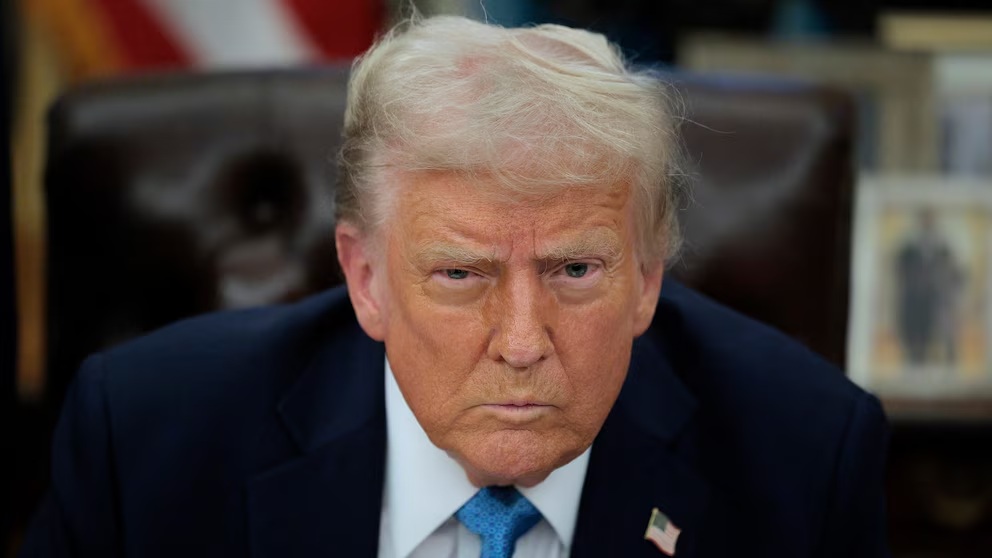


The Trump administration is hailing the latest inflation numbers as evidence that its economic policies are delivering results, even as underlying price pressures show signs of persistence. The July Consumer Price Index (CPI) revealed that headline inflation held at 2.7% year-over-year — unchanged from June — as falling gas and grocery prices offset higher costs for certain imported goods.
White House press secretary Karoline Leavitt issued a statement shortly after the data’s release, calling the report “another win” for the administration’s economic agenda. “Today’s CPI report revealed that inflation beat market expectations once again and remains stable, underscoring President Trump’s commitment to lower costs for American families and businesses,” she said. “The Panicans continue to be proven wrong by the data – President Trump’s tariffs are raking in billions of dollars, small business optimism is at a five-month high, and real wages are rising. The American people have rightfully put their trust in President Trump’s America First agenda that is Making America Wealthy Again.”
The headline figure masks a more complex picture beneath the surface. Core CPI — which excludes the volatile food and energy categories — climbed to 3.1% from 2.9% in June, suggesting lingering inflationary pressure in sectors not immediately affected by commodity price swings. Economists warn that while consumers are benefiting from cheaper fuel and groceries, the cost of goods such as shoes, furniture, and coffee has been pushed higher by tariffs imposed earlier this year. Many businesses have absorbed these increases so far, but analysts say that could change, with potential for more direct price hikes or “shrinkflation,” where package sizes shrink but prices remain the same.
Gas prices fell 2.2% from June and are now down 9.5% compared to last year. Grocery prices slipped 0.1% in July, extending a trend of modest monthly declines. These decreases helped offset the tariff-driven rise in import costs and kept the headline inflation figure in check. Still, Brian Bethune, an economist at Boston College, noted that the average U.S. tariff rate — calculated as duties paid divided by total imports — has climbed to 10%, the highest in decades. “Those cost increases will be passed on to the consumer in some way, shape, or form,” he said.
For the Federal Reserve, the data poses a policy dilemma. On one hand, slowing job growth and steady headline inflation could justify an interest rate cut in September. On the other, the uptick in core inflation points to stubborn price pressures that could be worsened by premature easing. Fed Chair Jerome Powell has signaled a cautious approach, weighing the risk of loosening too quickly against the possibility of allowing the labor market to weaken further.
President Trump, however, is not urging patience. In a Truth Social post Tuesday morning, he renewed his criticism of Powell, demanding immediate rate cuts and blasting the Fed’s handling of a $3 billion renovation of its buildings — a project Trump claimed should have cost just $50 million. “Jerome ‘Too Late’ Powell must NOW lower the rate,” Trump wrote, adding that “fortunately, the economy is sooo good that we’ve blown through Powell and the complacent Board.”
The CPI report, released monthly by the U.S. Bureau of Labor Statistics, offers one of the most closely watched snapshots of price trends in the American economy. July’s data shows that while overall inflation remains under control, the pressures beneath the surface are far from resolved — setting up a fall policy season in which both the White House and the Fed will be under intense scrutiny.


 Pump Radar
 Stock Alerts