
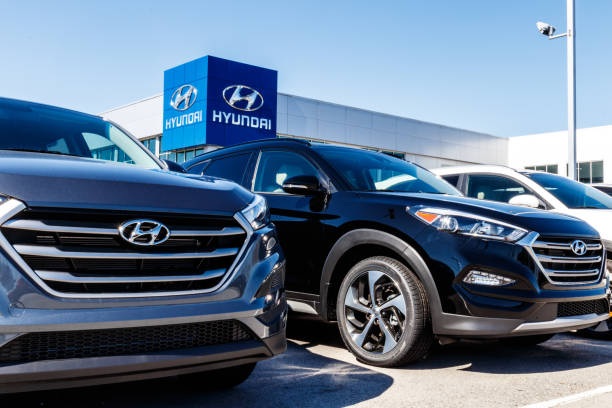


Hyundai Motor Company is reportedly considering a 1% increase in the suggested retail prices of its entire U.S. vehicle lineup in response to tariffs imposed by the administration of U.S. President Donald Trump, according to a Bloomberg News report citing sources familiar with the matter.
The potential price hike could be implemented as early as next week and would apply only to newly manufactured vehicles, leaving existing inventory on dealer lots unaffected. The move aims to cushion the financial blow from the recently enacted 25% tariff on imported cars, which took effect on April 3.
Despite the report, Hyundai has denied making any definitive decisions about adjusting prices. “We have not made any decision regarding price changes after the current price guarantee period ends on June 2,” a Hyundai official stated on Friday. The official clarified that the company’s ongoing price review is part of its regular June evaluation cycle and is unrelated to the new tariff.
The automaker emphasized its commitment to maintaining current U.S. vehicle prices, including those for its luxury Genesis brand, through June 2. CEO Jose Muñoz echoed this stance during his address at the Seoul Mobility Show 2025 on April 3, the same day the tariffs took effect, stating there were no plans to raise U.S. prices at that time.
However, Muñoz later hinted during a speech in New York that price adjustments could be considered after June, depending on evolving market conditions.
Hyundai continues to face pressure to reassess its U.S. pricing strategy following the tariff’s implementation. Although the company is expanding its local production capacity—most notably with the opening of the Hyundai Motor Group Metaplant America in Georgia, which adds 300,000 units of annual capacity—a significant portion of its U.S. vehicle supply remains reliant on imports from Korea.
Last year, Hyundai exported 637,638 vehicles from Korea to the U.S., making up roughly 69.9% of its total U.S. sales.
Bloomberg also reported that Hyundai may look to increase shipping fees and optional equipment charges, such as those for floor mats and roof rails, as an alternative to raising base prices further.
While Reuters has not independently verified Bloomberg’s report, a Hyundai spokesperson noted that no final decisions have been made regarding pricing changes after June 2. “We will continue to adapt to shifts in supply, demand, and regulatory changes with a flexible pricing strategy and targeted incentive programs, always striving to deliver value to our customers,” the spokesperson said.
The broader auto industry is grappling with elevated supply chain costs stemming from the new tariffs, as well as growing consumer caution amid economic uncertainty. Hyundai has already begun shifting some production, such as its Tucson crossovers, from Mexico to the U.S., and has established a task force to help absorb the impact of the tariffs.

 Pump Radar
 Stock Alerts